
Square Tiles: An Australian Buying Guide
01 September 2026 · Updated 22 November 2026 · Tile Touch
Quick answer
Square tiles are sold in formats from small 100 x 100 mm up to large 600 x 600 mm, in porcelain or ceramic and in matt or gloss finishes. Pick the size to suit the job: large squares like 600 x 600 mm suit open floors, while smaller squares and mosaics suit walls, splashbacks and shower niches. Check the slip rating on any floor tile before you buy.
Key takeaways
- Common square sizes run 98 x 98 mm, 100 x 100 mm, 152 x 152 mm, 200 x 200 mm and 600 x 600 mm.
- Porcelain is the usual pick for floors; ceramic is common on walls.
- Matt finishes hide marks and are easier underfoot; gloss reflects light and lifts small areas.
- For floors, read the slip rating (P3, P4) and match it to the room.
- Order a sample first, and buy extra for cuts and future repairs.
Why size matters most
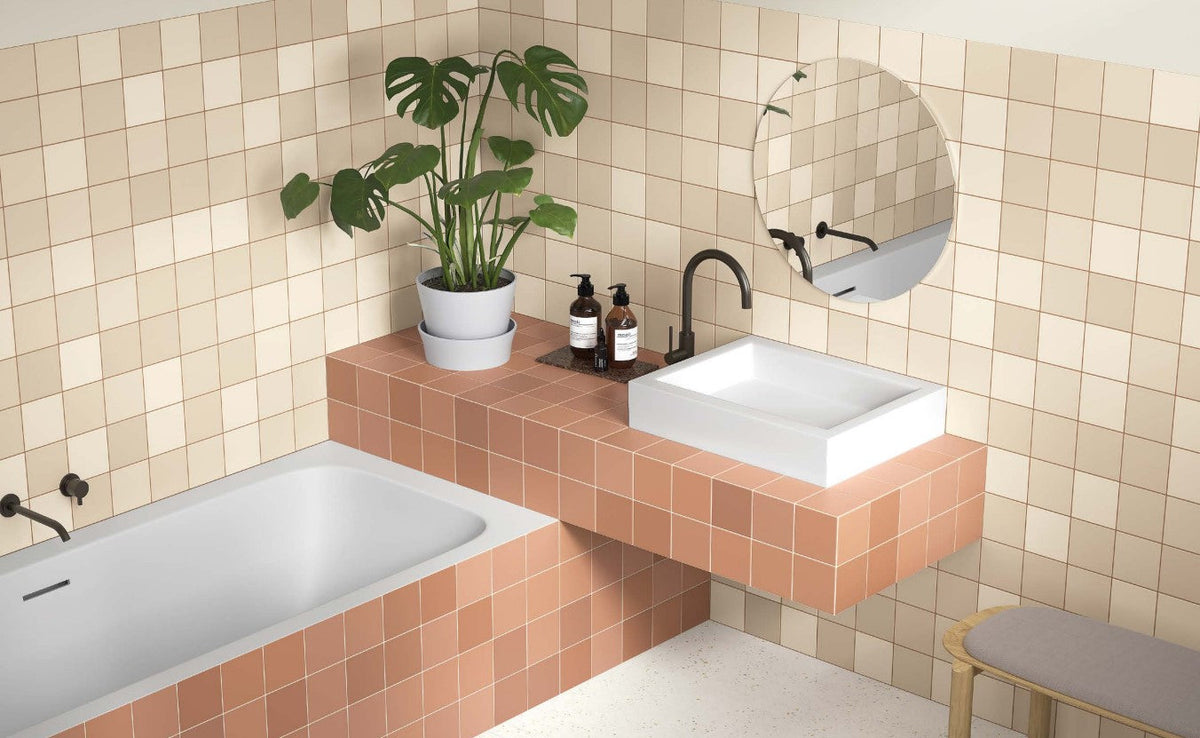
The single biggest decision with a square tile is the size, because it changes both the look and the amount of grout. A small square like the Ligato Pink Gloss 100 x 100 mm or the Indi Jade Gloss 100 x 100 mm gives you a tight, repeating grid with plenty of grout lines, which reads as detailed and a bit retro. Go up to a 152 x 152 mm square such as the Rela Mist Matt and the grid relaxes. At 600 x 600 mm, like the Reso White Matt or the Conroy Black Concrete Look, you get fewer joins and a calmer, more open floor.
A simple rule: smaller squares suit walls, splashbacks and shower floors where grip and detail help, while larger squares suit open floor areas where you want fewer lines. Mid sizes such as 200 x 200 mm sit comfortably on both floors and feature walls.
Porcelain or ceramic
Porcelain is denser and harder, which is why it is the common choice for floors and wet areas that see traffic. Tiles like the Conroy Black Concrete Look, the Reso White Matt and both Colato Terrazzo Look squares are porcelain in a 600 x 600 mm format. Ceramic is lighter and well suited to walls; the Indi Jade Gloss, the Indi Elegant Greige Gloss, the Kiko Square and Subway Pattern White Gloss and the Rela Mist Matt are all ceramic.
If you are tiling a floor, lean porcelain. If you are doing a splashback or a shower wall, ceramic gloss squares are a long-standing, practical option.
Matt or gloss finish
Matt tiles scatter light, hide water spots and footmarks, and feel more low-key. The Reso White Matt, the Rela Mist Matt and the Odilia Encaustic Look Bone White Petal are all matt. Gloss tiles bounce light around, which helps a small bathroom or a dark splashback feel brighter. The Ligato Pink Gloss, Indi Jade Gloss, Indi Elegant Greige Gloss and Kiko White Gloss all carry a gloss finish.
On floors, matt is usually the safer call for grip and upkeep. Gloss tends to belong on walls, where slip is not a concern and the shine does its job.
Slip ratings for floors
Australian floor tiles carry a slip rating, and it is worth checking before you commit. P3 suits most internal domestic floors; the Conroy Black Concrete Look and the Odilia Encaustic Look Bone White Petal are rated P3. P4 gives more grip for wetter or busier areas, and both the Colato Dark Grey and Colato Light Terrazzo Look squares are rated P4. If a tile is listed without a rating, treat it as a wall tile unless told otherwise.
Mosaics and small squares
Square mosaics are squares in miniature, usually supplied on sheets so they are quicker to lay across walls and curved shower bases. The Bridges Large 98 x 98 mm Ivory Square Mosaic works as a feature wall or splashback. The Yohaku Japanese Square Mosaic in green is a Japanese range that brings a handmade look to walls and niches. Mosaics also help on shower floors, because the extra grout gives grip and lets the tile follow the fall to the drain.
Matching tiles to rooms
In a kitchen, a gloss square splashback such as the Kiko White Gloss or a coloured 100 x 100 mm like the Ligato Pink Gloss lifts the space, with a porcelain floor like the Reso White Matt underneath. In a bathroom, pair a P3 or P4 floor with a ceramic gloss wall, and use a mosaic in the shower. For living areas and hallways, a large 600 x 600 mm porcelain square keeps the floor quiet and easy to clean. Pattern-look squares like the Odilia Encaustic Look or the Colato Terrazzo Look add character without wallpaper-level fuss.
Square tile sizes compared
| Size | Example | Material | Typical use |
|---|---|---|---|
| 98 x 98 mm mosaic | Bridges Large Ivory Square Mosaic | Mosaic sheet | Feature walls, splashbacks |
| 100 x 100 mm | Ligato Pink Gloss, Indi Jade Gloss | Porcelain / Ceramic | Splashbacks, walls |
| 152 x 152 mm | Rela Mist Matt | Ceramic | Walls, feature areas |
| 200 x 200 mm | Odilia Encaustic Look Bone White Petal | Porcelain | Floors and walls |
| 600 x 600 mm | Reso White Matt, Conroy Black Concrete Look | Porcelain | Open floors |
Before you order
Order a sample so you can see the colour and finish in your own light. Buy a little extra beyond your measured area to cover cuts and keep spares for repairs down the track, because dye lots can shift between batches. Tile Touch ships Australia-wide and has a Sydney showroom in Waterloo if you want to see the squares in person first.
FAQs
What is the most common square tile size in Australia?
There is no single standard, but 600 x 600 mm is a popular floor format and 100 x 100 mm is common for walls and splashbacks. The right size depends on the room and the look you want.
Can I use square tiles on both floors and walls?
Yes, though the material matters. Porcelain squares like the Reso White Matt handle floors well, while ceramic squares such as the Kiko White Gloss are made for walls. Always check the slip rating before putting a tile on a floor.
Are gloss square tiles slippery on floors?
Gloss tiles are best kept to walls and splashbacks, where slip is not an issue. For floors, choose a matt tile with a suitable slip rating, such as a P3 or P4 porcelain.
Do square mosaics work on shower floors?
They do. The sheets flex to follow the fall to the drain, and the extra grout lines add grip underfoot. The Bridges Ivory Square Mosaic and the Yohaku Japanese Square Mosaic are examples that suit wet areas.
How many spare tiles should I buy?
Order more than your exact measured area to allow for cuts, breakages and future repairs. Keeping a few spare tiles from the same batch saves you chasing a colour match later.