
Are Hand-Glazed Japanese Tiles Worth It?
02 November 2026 · Tile Touch
Quick answer
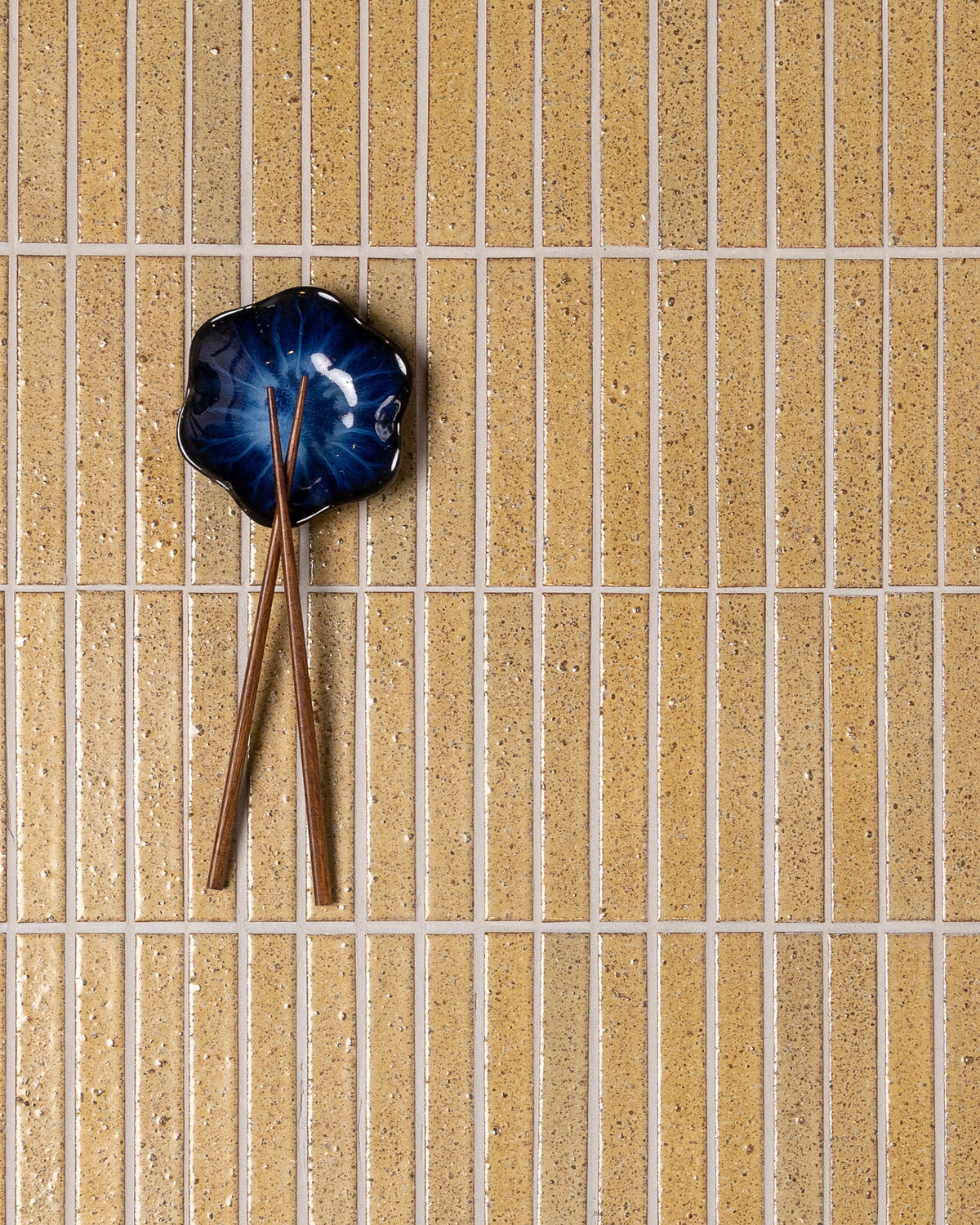
For most Australian kitchens and bathrooms, hand-glazed Japanese tiles are worth it when you want a surface with real variation in colour and light, the kind you notice up close on a splashback or feature wall. They cost more than mass-produced porcelain, so they earn their place on smaller, visible areas rather than large floors.
Key takeaways
- Hand-glazing gives each tile slight shifts in tone and sheen, so a finished wall reads as a living surface rather than a flat print.
- Our Hatsu range is hand-made in Japan in porcelain, including Long Brick (47.5 x 304 mm) and Square (72 x 72 mm) formats.
- They suit splashbacks, shower walls and feature panels, where the glaze is seen at close range and in changing light.
- Finishes vary from gloss (Hatsu, Regia White 25, Perla Mix 1) to matte (Ehon Plain 5, Marlon Beige, Slender 04).
- Order a sample first, since hand-glazed colour is best judged in your own light before you commit.
What "hand-glazed" actually means
On a standard printed porcelain tile, the surface pattern is applied by machine and repeats. Hand-glazed tiles are coated by hand, so the glaze pools and thins in slightly different ways across each piece. The result is subtle movement in colour and gloss from tile to tile.
That variation is the point. It is why a hand-glazed wall looks handmade rather than mechanical, and why people tend to install it where they will see it every day.
The Hatsu range: hand-made in Japan
Hatsu is our own hand-made Japanese line, made in porcelain with a gloss finish. It comes in a few shapes so you can match the look to the room.
Hatsu Long Brick is a slim brick at 47.5 x 304 mm, available in White and Burnt Red. Laid in a stacked or offset pattern, the long format stretches a wall and the gloss catches light along its length. Hatsu Square is a compact 72 x 72 mm tile in Wheat and Mahogany Burgundy, which reads warmer and more grid-like. For edges and trims, Hatsuborder in Burnt Red is a narrow 23 x 153 mm border.
The Hatsu tiles carry a P2 slip rating. P2 is a wall and general-use rating, so these work well on splashbacks and shower walls. For wet floor areas you would normally choose a higher slip rating, so keep Hatsu for walls and features.
Other Japanese ranges we stock
Hatsu is the lead, but there are several other Japanese-made tiles worth knowing if you want a particular look.
Ehon Plain 5 is a matte porcelain painted tile that comes in mixed sizes, from 97 x 97 mm down to 97 x 47 mm, which lets you create a less uniform, hand-set layout. Perla Stingray STI 2 is a gloss porcelain in a 84 x 152 mm format, and Perla Mix 1 is a gloss 240 x 60 mm brick for a longer line.
If you like fine mosaic detail, Marlon Beige and Regia White 25 are both 25 x 25 mm porcelain, one matte and one gloss. Regia Ribbed Bronze 97 is a 97 x 97 mm gloss tile with a ribbed face that adds texture. Slender 04 is a matte 96 x 21 mm tile, very narrow, for a tight linear look.
Where they are worth it, and where they are not
Hand-glazed tiles earn their cost on areas you look at closely. A kitchen splashback, a bathroom feature wall, the wall behind a vanity, or a shower niche all show the glaze at its best. In these spots the extra depth of colour is visible and the tiled area is usually small, so the total cost stays reasonable.
They make less sense across a large floor or a big low-visibility wall. On a broad floor you want slip rating and budget to lead the decision, and the fine glaze variation is lost underfoot. If you are tiling a whole laundry or a large open floor, a plainer porcelain is usually the better call, and you can still bring in a hand-glazed feature on one wall.
How to choose a finish and shape
Gloss finishes bounce light and make colour look deeper, which suits splashbacks and feature walls. Matte finishes are quieter and hide water spotting and smears better, which some people prefer in a bathroom.
Shape changes the mood as much as colour. Long bricks lengthen a wall, squares feel calm and even, small 25 x 25 mm mosaics give fine detail and curve around shapes well, and narrow formats like Slender 04 draw a strong line. Here is a quick comparison of the ranges by size and finish.
| Range | Size | Finish | Origin |
|---|---|---|---|
| Hatsu Long Brick (White, Burnt Red) | 47.5 x 304 mm | Gloss | Japan |
| Hatsu Square (Wheat, Mahogany Burgundy) | 72 x 72 mm | Gloss | Japan |
| Hatsuborder Burnt Red | 23 x 153 mm | Gloss | Japan |
| Ehon Plain 5 | Mixed (97 x 97 to 97 x 47 mm) | Matte | Japan |
| Perla Stingray STI 2 | 84 x 152 mm | Gloss | Japan |
| Perla Mix 1 | 240 x 60 mm | Gloss | Japan |
| Marlon Beige | 25 x 25 mm | Matte | Japan |
| Regia White 25 | 25 x 25 mm | Gloss | Japan |
| Regia Ribbed Bronze 97 | 97 x 97 mm | Gloss | Japan |
| Slender 04 | 96 x 21 mm | Matte | Japan |
FAQs
Are hand-glazed Japanese tiles more expensive?
Generally yes, they sit above mass-produced porcelain because the glaze is applied by hand. The upside is that you usually only need them on a small, visible area like a splashback, so the total cost stays manageable.
Can I use Hatsu tiles on a floor?
Hatsu carries a P2 slip rating, which is a wall and general-use rating, so we recommend it for splashbacks, shower walls and feature walls. For wet floors you would choose a tile with a higher slip rating.
Will the colour vary between tiles?
Yes, and that variation is part of the appeal of a hand-glazed surface. Because the look shifts with the light in your room, it is worth ordering a sample before you buy.
Do you ship Japanese tiles across Australia?
Yes. Tile Touch ships Australia-wide, and you can see the ranges in person at our Sydney showroom in Waterloo. Samples are available if you would like to check colour and finish at home first.